Straight!?
Play Straight!?
Straight!? Screenshots











Straight!? review
A comprehensive guide to understanding the mechanics, storyline, and unique elements of this interactive experience
Straight!? stands out as a distinctive interactive experience that combines narrative-driven gameplay with engaging mechanics. Whether you’re new to this type of game or a seasoned player, understanding what makes Straight!? tick is essential for getting the most out of your experience. This guide breaks down everything you need to know about the game’s core features, gameplay systems, and what players can expect when diving in. From character interactions to decision-making mechanics, we’ll explore the elements that make this game memorable and worth your attention.
Understanding Straight!? Core Gameplay and Mechanics
So, you’ve clicked on Straight!?, intrigued by the promise of a story shaped by your choices, but now you’re staring at the screen wondering, “Okay, how does this actually work?” 🤔 I was in the same boat. The beauty of an interactive story game like this isn’t just in the plot—it’s in the feeling that your voice, your decisions, are the engine driving everything forward.
Forget complex control schemes or punishing skill checks. The Straight!? gameplay mechanics are elegantly focused on one thing: your agency. You read, you think, you choose. But beneath that simple loop lies a beautifully intricate system of cause and effect, where every conversation is a potential turning point and every smile you earn (or scorn you provoke) echoes into future chapters. This chapter is your roadmap to mastering that system. We’ll peel back the layers of its decision-making gameplay, explore the delicate dance of its character relationship system, and see how your choices weave unique Straight!? story paths. Let’s get started.
How Does Straight!? Gameplay Work?
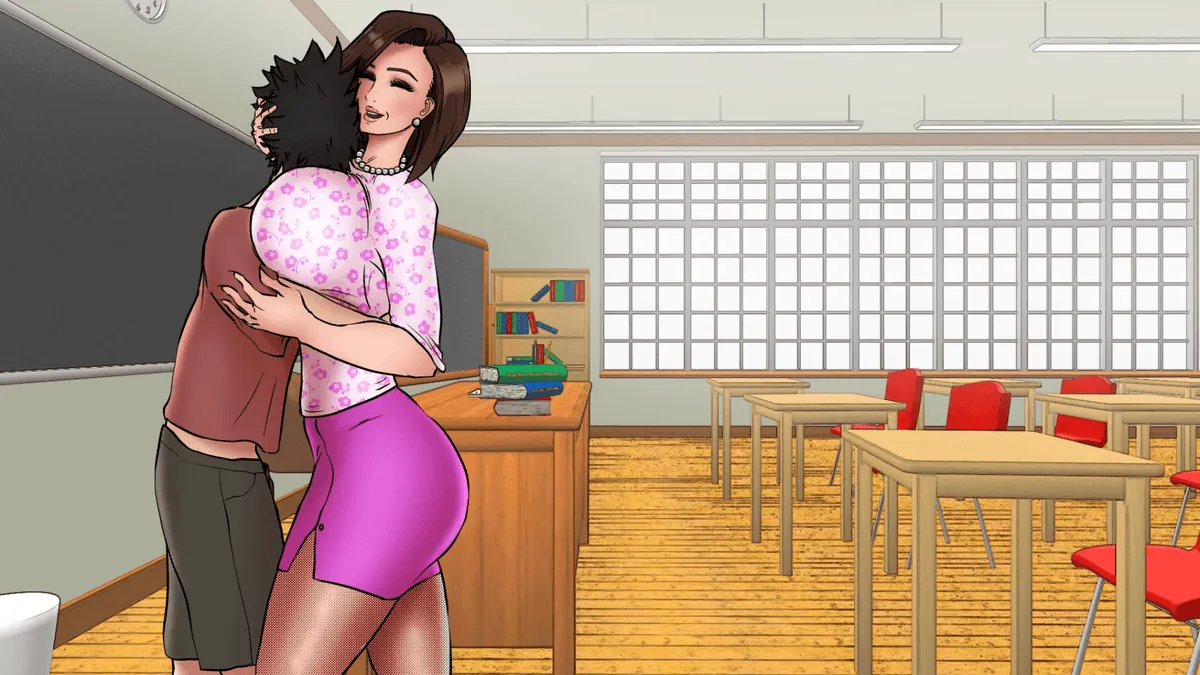
At its heart, Straight!? operates on a visual novel framework, but to call it just that feels like calling a symphony just a bunch of notes. 🎻 The core loop is immersive yet straightforward. You progress through beautifully illustrated scenes and written narrative, and at key moments, the game presents you with a choice. These aren’t just “Good Option / Bad Option” prompts. They are nuanced reflections of personality, strategy, and morality.
The primary Straight!? gameplay mechanics revolve around navigation and selection. You’ll use simple clicks or taps to:
* Advance dialogue and narrative descriptions.
* Select from multiple-choice decisions during conversations and pivotal story beats.
* Occasionally examine subtle environmental details that can add context or even unlock special dialogue options.
* Access the game’s menu to review your relationship status with characters, view your choice history, and save your progress at almost any point.
A typical playthrough can vary wildly, but expect to spend several hours on a single path. My first run, where I followed my gut without overthinking, took me about five hours of engrossed play. The pacing is masterful—it knows when to hit you with rapid-fire, tense decisions and when to let you breathe and soak in the quieter character moments.
What truly sets the Straight!? gameplay mechanics apart is the transparency of consequence. You often feel the weight of a choice immediately in a character’s reaction, but the real magic is in the long game. A supportive comment in Chapter 2 might give you the crucial credibility to challenge that same character in Chapter 6. The game remembers everything.
Pro Tip from My Playthrough: Don’t rush! Straight!? is a game to savor. Read the descriptions of a character’s fleeting expression or body language. Those details often hint at how they’re really feeling, giving you an edge in future interactions.
Here’s a quick checklist of the key interactive elements you’ll master:
- Dialogue Choices: The main driver of the story and relationships. Options range from polite to blunt, strategic to emotional.
- Action Decisions: Occasionally, you’ll choose an action (e.g., “Confront them now” vs. “Gather more information first”).
- Relationship Checkpoints: Invisible meters track your bond with each major character, opening or closing certain branching narrative choices later on.
- The “Memory” System: The game’s internal tracker of your major decisions, which ultimately determines your route and ending.
To give you a clearer picture, here’s a breakdown of a typical decision screen and its components:
| Screen Element | What It Represents | Player Mindset |
|---|---|---|
| Character Sprite & Expression | The visual cue of who you’re interacting with and their current mood. | “They look skeptical. Do I need to be more convincing or back off?” |
| Dialogue Text | The immediate context of the conversation or situation. | “What is the core conflict or question here?” |
| Choice Options (2-4) | The possible paths forward, each with implied tone and intent. | “Which of these aligns with my character’s goals or feels most authentic to me?” |
| Background & Music | Atmospheric cues that set the emotional tone (tense, romantic, melancholic). | “The music is somber. This is a serious moment, maybe not the time for a joke.” |
Character Interactions and Relationship Building
If the choices are the engine, the characters are the heart and soul. The character relationship system in Straight!? is less about grinding points and more about cultivating genuine, sometimes messy, connections. 🫂 This isn’t a simple “like/dislike” bar. It’s a dynamic web of trust, respect, affection, and conflict.
Each major character has a set of core values and personality traits. Your character interaction mechanics involve learning these traits and deciding how to respond to them. Is Alex fiercely independent but vulnerable? A choice that respects their autonomy might build trust, while a smothering, protective option could create distance. The game brilliantly avoids archetypes, making each character feel multi-dimensional.
I learned this the hard way. In my first run, I thought I was being charmingly persistent with one character, Riley. I kept choosing playful, teasing options. The game didn’t flash a “RELATIONSHIP DOWN” warning—instead, Riley’s responses grew shorter, their sprite’s smile became strained, and eventually, a crucial scene where I needed their help simply wasn’t available. They politely brushed me off. It was a brilliant, subtle lesson: connection requires empathy, not just intention.
The character interaction mechanics often present you with choices that test compatibility. Do you share a difficult truth to build honesty, or withhold it to keep the peace? Do you side with a character in an argument, strengthening your bond with them but potentially alienating another? These dilemmas form the crux of the experience.
How to Build Meaningful Bonds:
* Consistency is Key: Characters notice if your behavior shifts wildly. Picking a compassionate option once and a cruel one next will confuse them and harm your reliability stat (even if it’s hidden).
* Listen and Observe: Pay attention to what characters say about their past, their fears, and their desires. Referencing this knowledge in later conversations can trigger special, deeply rewarding dialogue options.
* Not Every Bond is Positive: Sometimes, a tense, adversarial relationship is just as narratively compelling and can lead to its own unique Straight!? story paths. The system accommodates rivalry and conflict as valid relationship states.
This rich character relationship system ensures that no two players will have the exact same dynamic with the cast. Your “best friend” in one playthrough might be a chilly acquaintance in another’s, all based on your branching narrative choices.
Decision-Making Systems and Story Branching
This is where all the threads come together. The decision-making gameplay in Straight!? is what transforms it from a story you read into a story you author. ✍️ The branching isn’t just about picking Ending A, B, or C. It’s about the unique journey you take to get there—the scenes you witness, the conversations you have, and the relationships that flourish or wither based on your cumulative choices.
The narrative structure is like a tree with deeply interconnected roots. An early, seemingly innocuous choice might determine which branch of the tree you even have access to several chapters later. For example, choosing to skip a casual coffee invite might mean you miss a piece of backstory that later becomes the key to understanding a character’s major crisis, locking you out of their most intimate resolution path.
The game masterfully balances linear storytelling and player agency. There is a central plot that all paths touch upon—the “spine” of the story—but how you experience it, which characters become central to your version of events, and the emotional resolution are entirely in your hands. This makes multiple playthroughs not a chore, but a revelation. On my second run, I made deliberately different branching narrative choices, and I was stunned to find entirely new scenes, confrontations, and even subplots that were completely absent from my first playthrough.
What Makes the System So Engaging?
1. Consequences Feel Earned: Outcomes are rarely random. They are the logical, sometimes heartbreaking, result of the personality you’ve curated through your choices.
2. No “Right” Answer: The game resists pure optimization. The “best” choice is subjective, based on which relationships and outcomes you value most.
3. The Butterfly Effect is Real: Small kindnesses and minor deceptions can snowball in incredibly satisfying (or devastating) ways.
Here’s a simplified look at how early choices can funnel you toward different Straight!? story paths:
| Pivot Point (Early Game) | Choice A | Choice B | Potential Long-Term Narrative Branch |
|---|---|---|---|
| The Initial Conflict | Advocate for open communication and group unity. | Take a side, backing one character’s perspective strongly. | Leads to a path focused on collective problem-solving and group harmony. May unlock diplomatic endings. |
| Character’s Secret Revealed | Promise to keep their secret at all costs. | Argue that the secret is too big to keep from others. | Leads to a path of intense, private loyalty with that character, but may isolate you from the wider group and its support. |
| A Moment of Crisis | Act impulsively based on emotion. | Step back and analyze the situation calmly. | Determines which character traits are strengthened in *your* version of the protagonist, influencing which special decision options appear later. |
Practical Tips for New Players:
* Play Blind First: For your inaugural run, turn off guides. Embrace the anxiety and excitement of not knowing where your choices lead. Your authentic reactions create the most personal story.
* Save Liberally: Use multiple save slots, especially before major decisions. This lets you explore consequences without losing hours of progress.
* Embrace the “Failure”: Getting a “bad” ending or a fractured relationship isn’t losing. It’s discovering a powerful, valid strand of the narrative tapestry.
* Replay with a Persona: On subsequent plays, try adopting a specific persona (e.g., “Always protective,” “Chaotic neutral,” “Maximum honesty”). You’ll be amazed how the game’s character interaction mechanics adapt to this new “you.”
The genius of Straight!? is that it makes you care deeply before it asks you to choose. Its decision-making gameplay isn’t a test of skill, but a mirror held up to your own instincts, values, and desires. Every playthrough asks a new question: Who do you want to be in this story, and what kind of connections are you willing to fight for?
FAQ: Common Questions About Straight!? Gameplay
Q: How many different endings are there?
A: Without giving spoilers, there are multiple major ending categories, each with subtle variations based on your final relationship states. The true total is in the dozens, making every choice feel significant.
Q: Can I “fail” and get a game over?
A: Not in a traditional sense. The story will always progress to a conclusion based on your decisions. Some conclusions will feel more resolved or positive than others based on your goals, but there’s no “Game Over” screen that halts progress.
Q: Is there a way to see my relationship levels with characters?
A: The game uses a subtle, narrative-driven approach. You won’t see a numerical score. Instead, you can review your shared history with a character in the menu, and the tone of their dialogue and availability of certain scenes are your best indicators of your bond.
Q: How long does it take to see all the content?
A: To experience every major Straight!? story path and see all significant scenes, you’re looking at a substantial commitment—likely 20-30 hours across multiple playthroughs. The “Skip Read Text” feature for previously seen dialogue makes subsequent runs much faster.
Q: Should I use a walkthrough?
A: I strongly recommend against it for your first play. The magic is in the discovery and living with your decisions. If you’re aiming for a specific ending on a later run, then guides can be helpful tools.
Straight!? offers a compelling blend of interactive storytelling and meaningful player choice that keeps players engaged throughout their experience. The game’s strength lies in its character-driven narrative and the way it responds to player decisions, creating a personalized journey for each player. Whether you’re drawn to the relationship-building mechanics, the branching storyline, or the overall narrative experience, Straight!? delivers an engaging experience that rewards exploration and multiple playthroughs. If you’re considering diving into this game, approach it with an open mind and be prepared to make choices that genuinely matter to your story. The experience you get from Straight!? will be uniquely yours, shaped by the decisions you make along the way.